


Research and Advocacy
At Waves for Change, we know that research and learning can help ensure that our service is more effective, context-based, and continuously meets the needs of adolescents with diverse backgrounds. Working with experts, academic institutions, and communities of practice, allows us to be thought leaders in community-based, mental health promotion and prevention work. We also create spaces for child and youth voices to influence the design and delivery of our service.

Learn and Adapt
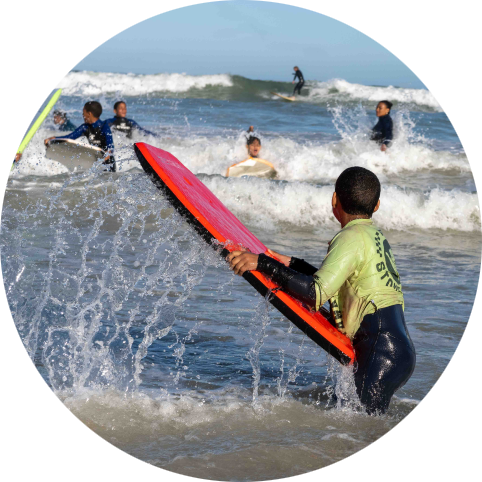
Over a decade of iteration and robust research with leading child and mental health academics, in addition to the design inputs and crafting of the programme by participant children, has resulted in a collaboratively created method to deliver trauma-informed mental health services to at-risk youth. External evaluations find W4C interventions achieve statistically significant improvements in children’s social and psychological health.
Competitors often fail to address poverty-related social determinants of mental health and neuropsychological consequences of poverty, such as impaired self-regulation, intervening much later in life. The W4C model does so effectively.
Research priorities
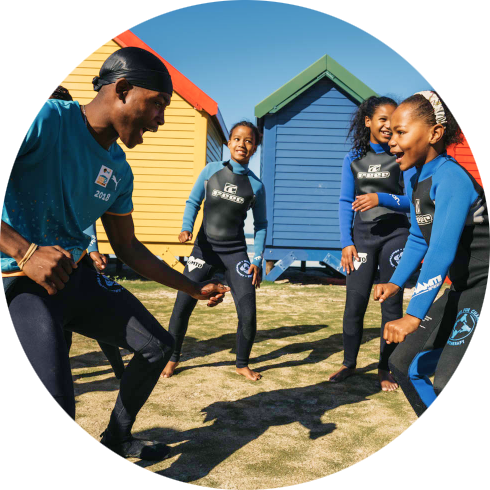
Most of the world’s adolescents live in low and middle-income countries (LMIC), where risk factors such as poverty are extremely high, and access to relevant services very low.
W4C therefore prioritises hosting and conducting research with world leaders in global mental health and poverty reduction, to co-develop effective, culturally relevant services for children and youth that can be scaled.
Our research and learning strategy for the next 5 years is to continue hosting and co-writing cutting-edge research and providing thought leadership on using group-based physical activity for mental health promotion and prevention in LMICs globally.
Our Research Partners
Waves for Change Surf Therapy and Partnerships work is underpinned by rigorous research in collaboration with:





The Alive Project
Waves for Change (W4C) are currently a leading partner in a Wellcome Trust funded project, led by King’s College London, called Improving Adolescent MentaL Health by Reducing the Impact of PoVErty (i.e. ALIVE).`
ALIVE is a 5-year research project funded by the Wellcome Trust [221940/Z/20/Z], led by two Principal Investigators, Prof Crick Lund and Prof Mark Jordans at King’s College London, UK. ALIVE uniquely brings together psychological and poverty reduction mechanisms in an effort to reduce the incidence of depression and anxiety among adolescents in Colombia, Nepal and South Africa.
Using the 5 Pillar Method as foundation
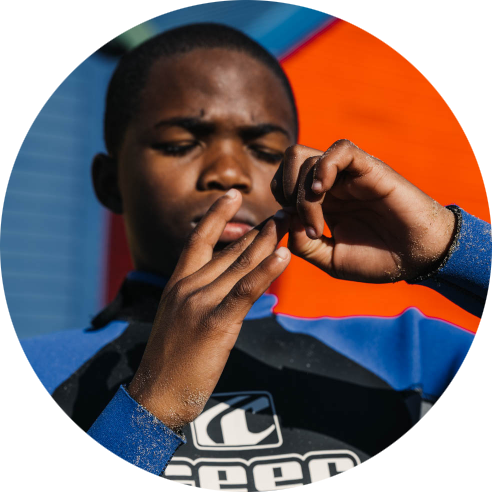
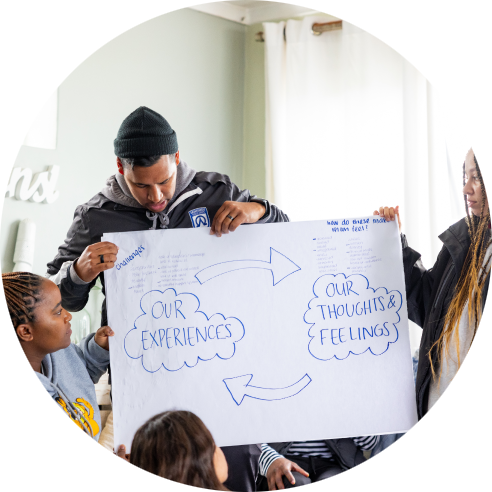
The aim of this study is to develop and pilot-test an intervention that equips adolescents with the skills to deal with the difficulties living in poverty and strengthen self-regulation, to prevent adolescent depression and anxiety in urban settings in three low- and middle-income countries. The intervention for self-regulation is largely based on W4C’s 5 Pillar Method, which was co-developed with youth and mental health experts through participatory research and development of our Surf Therapy services, and is in line with The Wellcome Trust’s ‘active ingredients’ of effective interventions for youth that can prevent anxiety and depression, and escalation of other mental health conditions.
Key project outcomes
The ALIVE project will develop and conduct a small randomised controlled trial of an intervention that both addresses poverty and strengthens self-regulation among adolescents living in urban poverty in Colombia, Nepal and South Africa. The project will also include the adaptation and validation of key measurement instruments, to assess how the intervention is delivered, how much it costs, the way in which it works, and its effect.
Key outcomes for W4C from the ALIVE project will include:
- Working with leading national and international tertiary institutions as thought leaders in global public mental health
- Age- and culturally adapted tools to measure mental health prevention and promotion outcomes across our Surf Therapy services, and that can be adopted by partners that we train in our 5 Pillar Method across other sports codes / in other similar settings in the future
- Small-scale randomised controlled trial assessing the effectiveness of Waves for Change’s surf therapy service based on our 5 Pillar Method
Our Research Journey
Download papers which have been published by or about W4C
Programme Design

An Exploration of Children’s Wellbeing & Self-concept – Our Foundation (Benninger Study) Journal
 Download

Behavioral and Biological Indicators of Risk and Well-being in a Sample of South African Youth – Journal
 View
View
An Exploration of Programme Theory Within Waves for Change Surf Therapy – Journal
View
Key Learning Briefs / Posters
W4C HRV Baseline Brief – Understanding Children’s Physiological Health
Download
Including Autism Spectrum Disorder Children in Surf Therapy
Download
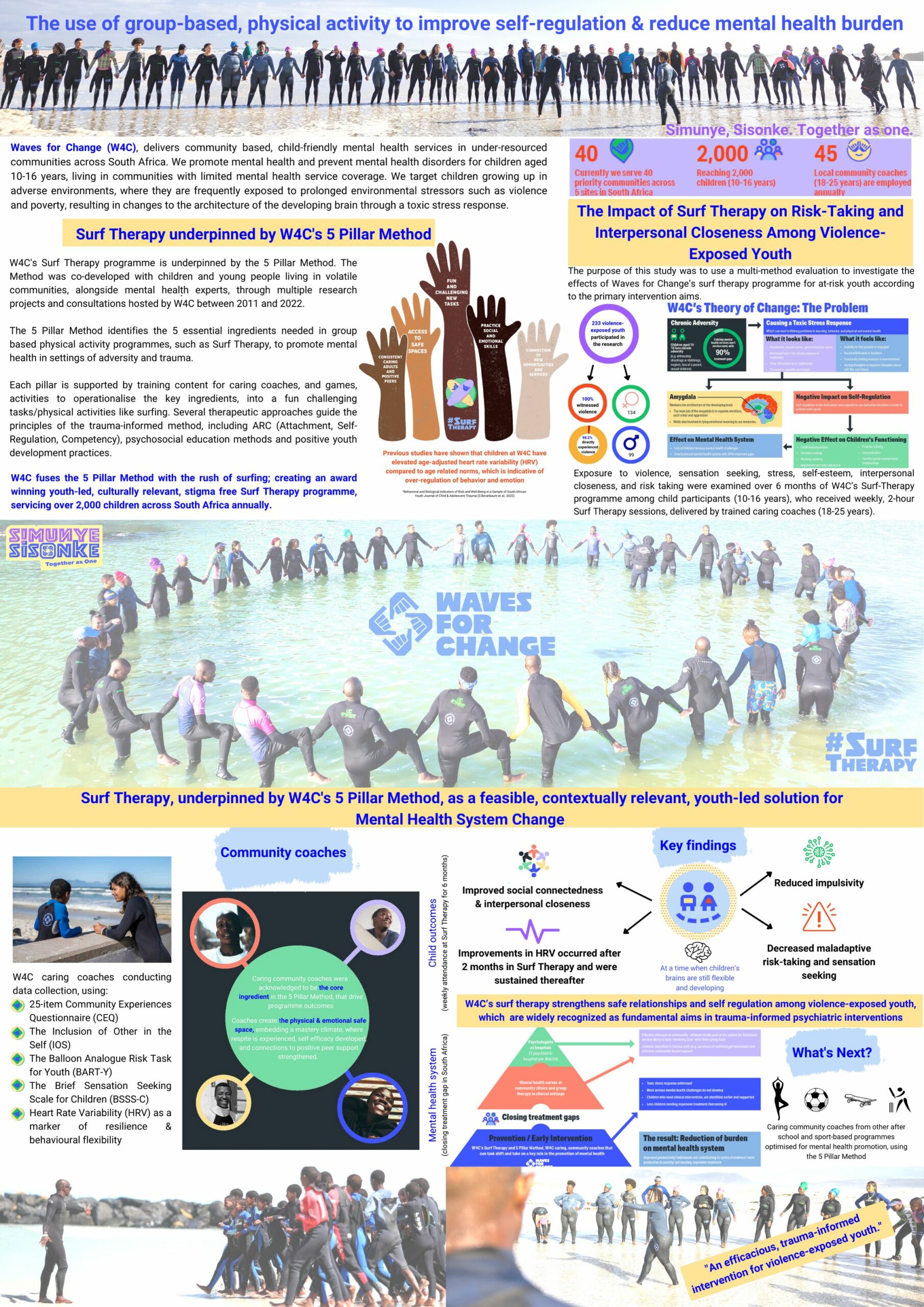
The Use of Physical Activity to Alleviate the Mental Health Burden in Children
Download
Scaling Adolescent Mental Health Services in Khaye Brief
Download